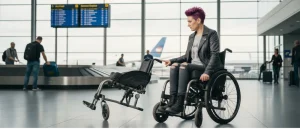
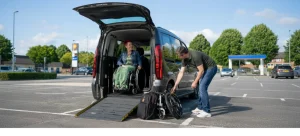
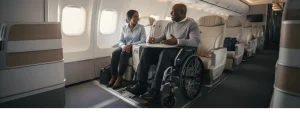
We travel as disabled people with mobility aids. That single sentence already explains why our trips look very different to most people’s.
When we travel, we’re not just choosing a destination. We’re calculating risk, we’re planning contingencies, and asking questions most people never have to think about — and doing it all long before we’ve even packed a bag.
We love travelling. But let’s not pretend it’s straightforward.
“Accessible” Has Burned Us Too Many Times
We used to believe people when they said yes, it’s accessible. We don’t anymore.
We’ve learned the hard way that accessible can often mean:
- “There’s only one step”
- “Staff will help you”
- “We’ve never had a wheelchair user complain before” (This one vexes me the most).
We’ve all heard at least one of these before!
This is why we now ask for specifics, because guessing costs energy we don’t have. If someone can’t tell us:
- Whether we can get in independently
- Whether we can move around the room properly
- Whether we can actually use the bathroom
Then we assume we can’t. We’re not being picky — we’re avoiding turning up somewhere and realising we’re trapped or dependent.
One Small Barrier Can Ruin the Whole Day
This is something non-disabled people rarely understand.
We can book an accessible hotel room and still miss out because:
- Breakfast is up steps – This happened to me when staying in a Premier Inn
- The bar toilet is downstairs – This is ironically more frequent than you might think.
- The pavement outside is impossible – No dropped kerbs, cars blocking drop kerb etc.
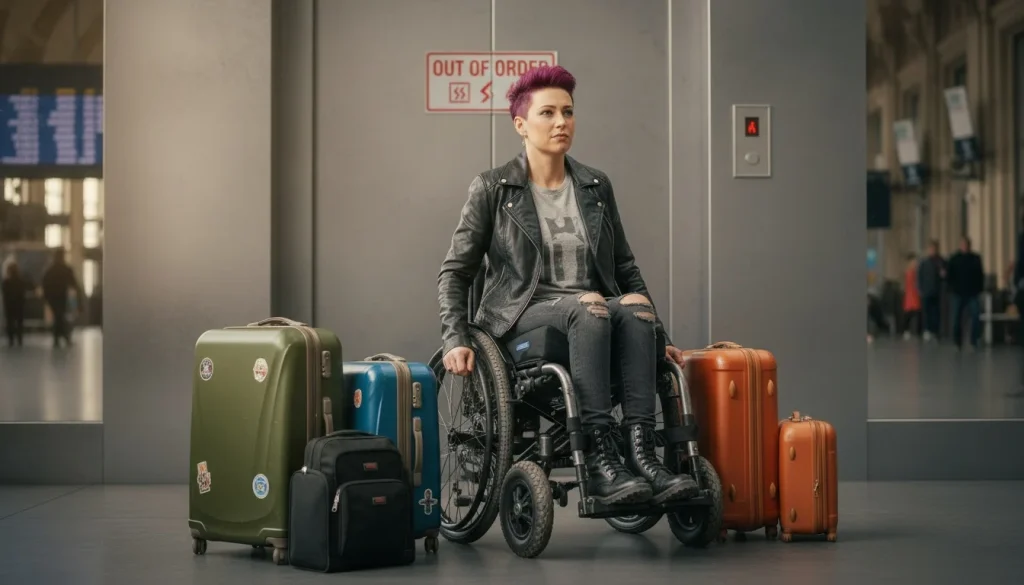
- The lift is “temporarily out of order” – Staying at a Renaissance hotel at Heathrow, they had to book me into another hotel for a weekend event I was attending, as the only lift that went to the accessible rooms was broken. This meant we had to travel back and forth from the (new) hotel for the event each day.
One tiny barrier can undo hours of planning. And once you’re tired, stuck, or stressed, the rest of the day often goes with it.
It’s not dramatic — it’s cumulative.
The Planning Is Exhausting Before the Trip Even Starts
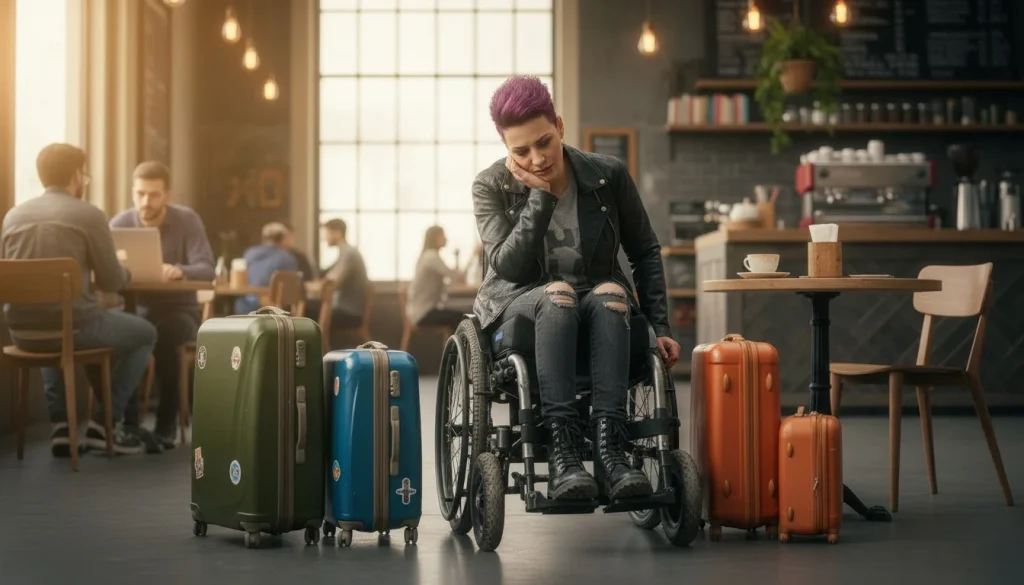
Before we travel, we’ve usually:
- Researched accommodation in painful detail
- Checked transport options multiple times
- Emailed people who may or may not reply
- Explained my/our needs more times than I can count
By the time we actually get away, we’re already tired.
Maybe we should plan slower trips, building in more rest and fewer packed days — not because we’re incapable, but because burnout is real. The trouble is, we don’t (and shouldn’t be expected to) want to miss a thing, so we carry on. Much to my detriment!
How We Research Now (Because We’ve Learned the Hard Way)
Accommodation
If possible, don’t rely on booking sites; by booking direct, you are in total control of your booking and anything you need put in place. We normally book direct, and when we do, we email directly and ask blunt questions. We want:
- Measurements
- Photos of the actual room
- Confirmation that the room is reserved for us, not just “requested” – Some hotels stipulate you have a room booked, but the accessible room is NOT guaranteed, only requested and, depending on availability, will determine whether you get that room! (A problem we are in the process of trying to rectify for a future trip, as we were unable to book directly, so a third party is making more of a mess of it than solving. (Unfortunately, a necessary evil).
If we get vague replies, overly cheerful reassurances, or silence, we walk away. We’ve learned that hope is not a strategy.
Getting Around
We check:
- Whether public transport is usable, not just technically accessible
- Whether accessible taxis exist and how far in advance they must be booked
- Whether pavements and crossings are navigable
Some places look great on paper but are utterly hostile in reality.
Things to Do
We look past the headline attraction and ask:
- Can we actually move around inside?
- Are lifts reliable, and staff trained to use them?
- Are accessible toilets unlocked and nearby?
If accessibility information is hidden, outdated, or defensive, that tells us a lot.
Airports: Where Independence Goes to Be Negotiated
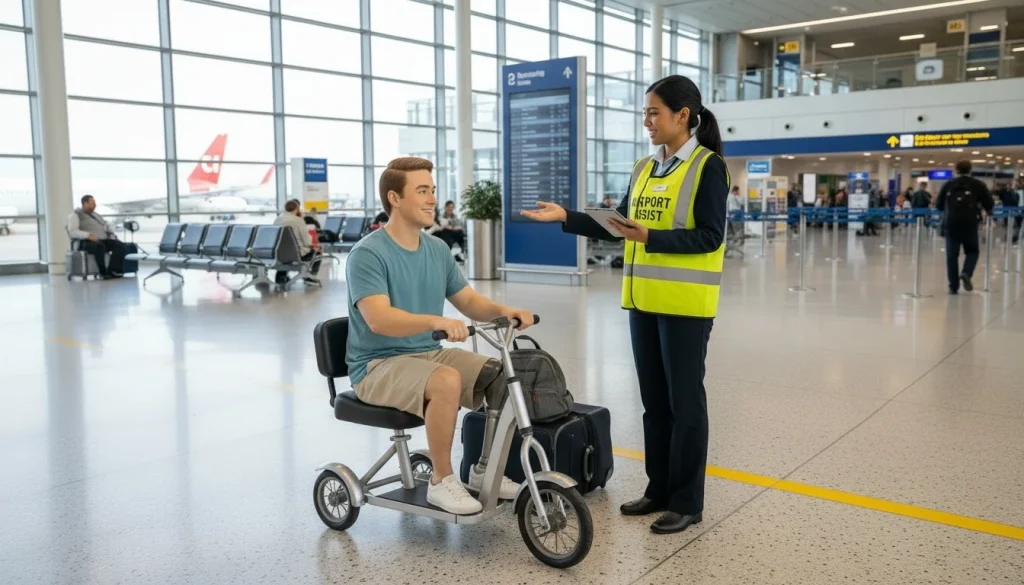
Flying is often unavoidable — and consistently stressful.
Airlines
As soon as we book, I contact the airline. I explain:
- My/our mobility aid – Depends if Jeff is taking his scooter on that occasion
- Sizes, weight, batteries etc.
- What help I need — and what I don’t
Then I repeat myself closer to the flight. Because experience has taught us that systems forget disabled people very easily.
Airport Assistance
Airport assistance can be brilliant — or an absolute mess. I’ve personally experienced both.
I’ve been supported calmly and professionally. I’ve also been rushed, left waiting, spoken over, and treated like a task rather than a person.
I now advocate for myself early and clearly, correct assumptions, and I say no when something feels unsafe. That took time to learn — but it matters.
Our Mobility Aid Is Not Optional
Our mobility aids aren’t a convenience. It’s how we move, function, and participate in the world.
So we now:
- Photograph my electric wheelchair and Jeff’s trike before we travel
- Remove detachable parts – (British Airways allows you an extra cabin bag for mobility aid parts FREE of charge, and it is not part of your allowance.)
- Carry basic repair tools – You should always speak to the airport/airline about taking tools, as you may have them taken off you at security. Obviously, this depends on the type of tools you are taking. We normally take Allen keys, a small pair of pliers, and a pocket screwdriver.
- If things go wrong, REPORT IT IMMEDIATELY, before leaving the airport – How To Advocate For Yourself When Air Travel Plans Go Wrong Because once you walk away, accountability tends to disappear.
The Emotional Side Nobody Warns You About
Travelling as a disabled person means constantly managing other people’s expectations and discomfort.
You’re:
- Asking for help
- Explaining yourself repeatedly
- Justifying needs that shouldn’t need justifying
It’s draining. And it’s okay to admit that.
I’ve stopped apologising for taking up space, needing time, or asking questions. Accessibility isn’t a favour. It’s the difference between inclusion and exclusion.
Our Personal Thoughts
Travelling with a mobility aid is possible. It can be joyful, empowering, and memorable. But it’s harder than it should be — not because of our bodies, but because accessibility is still treated as an afterthought.
The biggest lesson we’ve learned. If something feels vague, unclear, or too optimistic, trust that instinct. Ask more questions. Get it in writing, get everything in writing. And remember, needing access is not asking for special treatment — it’s asking to be able to exist.